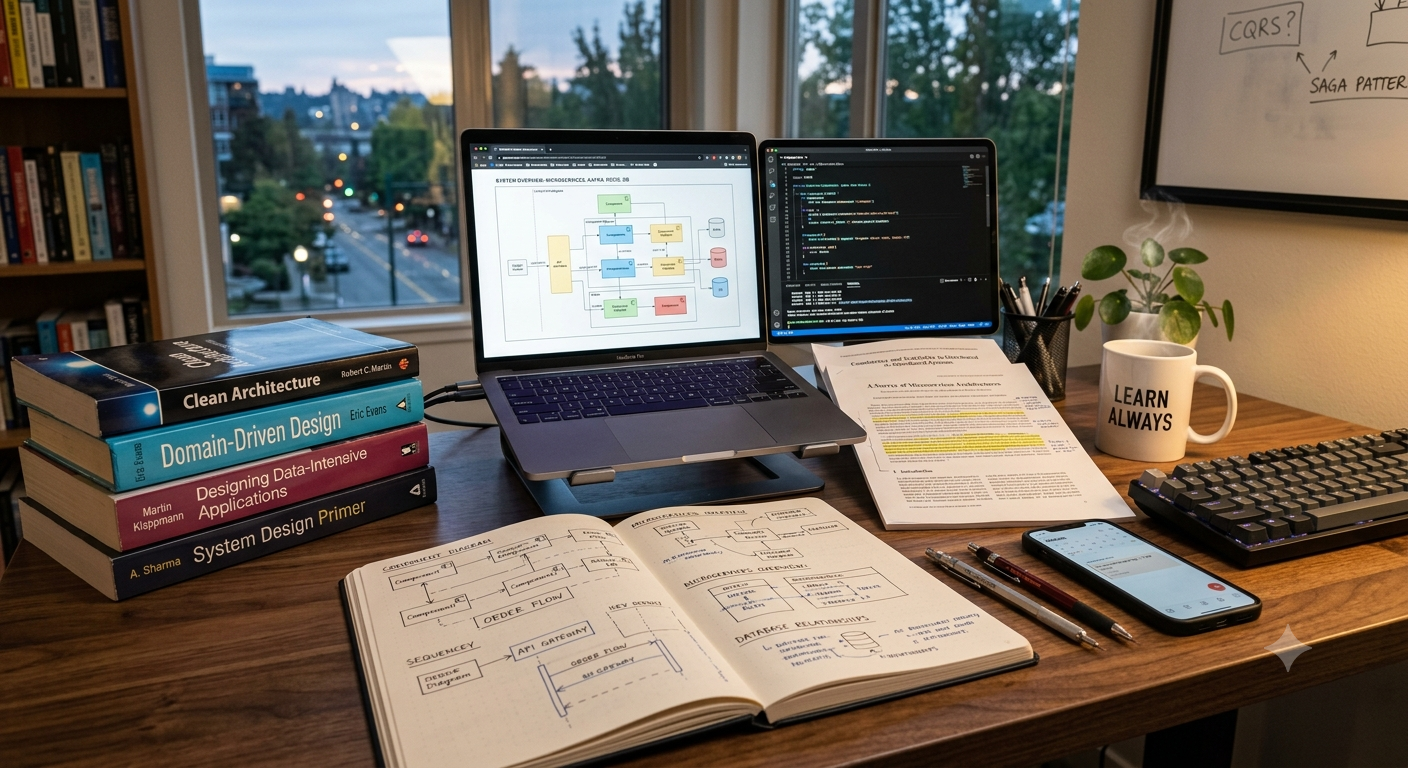
Stop right there, Before You Learn Python, JavaScript, or C++—Understand Syntax and Semantics First

Stop right there, Before You Learn Python, JavaScript, or C++—Understand Syntax and Semantics First

Why do many beginners struggle when they try to solve problems on their own?


Every year, millions of people begin learning programming. Most start with Python, JavaScript, Java, C++, or another popular language. They watch tutorials, follow online courses, and quickly become familiar with terms like variables, functions, loops, objects, and classes.

Yet many beginners struggle when they try to solve problems on their own.

Why?

Because:

They often learn what to write before understanding how programming languages work.

Before diving into any programming language, there are two fundamental concepts every learner should understand:

  • Syntax
  • Semantics

These concepts form the foundation of every programming language ever created.

What Is Syntax?

Syntax is:
The
set of rules that defines how code must be written.

Think of it as grammar in a spoken language.

In English, the sentence:

I am learning programming.

follows the language's grammatical rules.

Writing:

Programming learning am I.

contains the same words, but the arrangement breaks the grammar.

Programming languages work exactly the same way.

For example

In Python:

print("Hello, World!")

is valid syntax.

But:

print"Hello, World!"

is not.

The computer cannot understand incorrectly structured code, regardless of your intention, as we humans may have some difficulty understanding the unstructured words and sentences spoken.

Every programming language has its own syntax.

  • Python values readability.
  • Java requires braces and semicolons.
  • JavaScript has different conventions.
  • SQL has its own grammar entirely.

Learning syntax means learning how to communicate with the computer in a language it can parse correctly.

What Is Semantics?

Semantics is about the behavior and meaning of our program.

If syntax answers "Is the code written correctly?", semantics answers "What does this code actually mean?"

Consider this Python statement:

x = 10

The syntax is correct.

Semantically, it means:

Create a variable named x and store the value 10.

Now consider:

x = "10"

The syntax is still correct.

However, the meaning has changed.

The first stores an integer.

The second stores a string.

Understanding that difference is semantic understanding.

So once again;

Semantics is about the behavior and meaning of our program.

Correct Syntax Doesn't Always Mean Correct Logic

This is one of the biggest misconceptions beginners have.

A program can be syntactically perfect and still produce the wrong result.

For example:

age = 18

if age > 18:
    print("Adult")

The syntax is completely valid.

But if your intention was to include people who are exactly 18 years old, the program is logically incorrect.

The semantic meaning doesn't match the intended behavior.

Programming isn't only about writing valid code.

It's about writing code that correctly represents your intended solution.

Why Beginners Often Get Stuck

Many courses immediately introduce concepts like:

  • Variables
  • Functions
  • Loops
  • Classes
  • Objects
  • Modules
  • Decorators
  • Frameworks

While these topics are important, beginners sometimes memorize them without understanding the foundation underneath.

As a result, they learn patterns instead of principles.

When they encounter unfamiliar code, they feel lost because they've memorized examples rather than understanding the language itself.

How does Understanding Syntax and Semantics Make Learning Easier and faster

Once you understand syntax and semantics, learning a new language becomes much easier.

Instead of asking:

"How do I write this in Java?"

you naturally think:

  • What do I want the program to do?
  • What is the meaning (semantics) of my solution?
  • How does this language express that meaning using its syntax?

This mindset makes switching between languages significantly easier because the underlying computational concepts remain largely the same.

Think Like a Translator

Imagine you know several spoken languages.

The idea you want to express stays the same.

Only the words and grammar change.

Programming languages work similarly.

The algorithm—the idea—is the same.

The syntax changes.

The semantics should remain consistent.

Experienced developers rarely think in Python or JavaScript first.

They think in logic.

Then they express that logic using the syntax of a particular language.

A Strong Foundation Pays Off

Technology evolves constantly. New programming languages, frameworks, and libraries appear every year. However, syntax and semantics remain fundamental concepts across them all.

Learning these principles early helps you understand code more deeply, debug more effectively, and adapt more quickly to new technologies.

Before chasing the latest framework or mastering advanced language features, spend time understanding how programming languages communicate meaning.

This foundation will serve you throughout your development journey.

"A programmer who understands syntax and semantics can learn new languages with confidence. A programmer who memorizes only syntax must start over again and again."

Do not miss out checking our related articles.

  • Programming Is Not Coding: Understanding the Difference
  • How Computers Actually Execute Your Code
  • Algorithms Before Programming Languages
  • Data vs Information vs Knowledge in Computing
  • Compilation, Interpretation, and Execution Explained
  • Why Every Programmer Should Understand Abstraction
  • The Mental Models That Make You a Better Programmer

Reality Always Wins over forced perception: Two Quotes Every Software Engineer Should Remember

Reality Always Wins over forced perception: Two Quotes Every Software Engineer Should Remember

As someone teaching himself software engineering through books, research papers, online courses, documentation, and countless hours of experimentation, I occasionally come across ideas that fundamentally change the way I think about building software.

These two quotes are among them.

"For a successful technology, reality must take precedence over public relations, for nature cannot be fooled."
— Richard Feynman
"All science is either physics or stamp collecting. If your experiment needs statistics, you ought to have done a better experiment."
— Ernest Rutherford

Although neither quote was originally about software engineering, both capture principles that every developer eventually learns—sometimes the hard way.

Technology Doesn't Care About Our Assumptions

Richard Feynman's statement is brutally honest.

Software doesn't work because we believe it should.

A system doesn't become scalable because we call it "enterprise-grade." An architecture isn't maintainable because it follows the latest trend. A framework doesn't solve bad design decisions.

Reality is the final judge.

  • If an application is slow, users will notice.
  • If a database design is poor, performance will eventually expose it.
  • If a system is tightly coupled, maintenance costs will continue to grow regardless of how elegant the diagrams looked during planning.

In real world

  • A system either performs under load or it doesn't.
  • A backup either restores successfully or it doesn't.
  • A deployment is either repeatable or it isn't.

Nature cannot be fooled, neither can production.

Complexity Often Hides Poor Design

Ernest Rutherford's quote initially sounds controversial.

Modern software engineering depends heavily on statistics, analytics, monitoring, and experimentation.

Yet the underlying lesson remains powerful.

Many times, complexity exists because the original system wasn't designed carefully.

When developers constantly need workarounds, patches, exceptions, complicated documentation, and endless debugging sessions, those symptoms often point toward deeper architectural problems rather than isolated bugs.

Good engineering aims to eliminate unnecessary complexity before trying to measure it.

  • Simple systems are easier to understand.
  • Simple systems are easier to maintain.
  • Simple systems are easier to secure.

Simple systems usually outperform complicated ones over the long term.

What This Means for My Journey

As I continue learning software design and system architecture, I'm beginning to realize that writing code is only a small part of software engineering.

The real challenge is designing systems that remain understandable years later.

Every new concept—from database normalization and domain-driven design to clean architecture, event-driven systems, auditability, and scalable workflows—reinforces the same lesson:

Good software is rarely the result of clever tricks.

It is usually the result of careful thinking.

Why I'm Sharing This

One of the goals of White-Hat Cooperatives is to document the engineering principles, design decisions, and lessons learned throughout this journey.

This isn't a collection of shortcuts or viral programming tips.

It's a growing journal of ideas that influence how modern software should be designed, built, and maintained.

If these reflections help another developer think more critically about engineering, then sharing them has already served its purpose.

Because in software engineering, as in science, reality is always the ultimate reviewer.

Content for PlacesinPakistan.com

Conversation with ChatGPT for content for the site.


For some time I kept creating the content for the site generally by asking questions like

1- I am creating a website named placesinpakistan.com
i want to create content for that.
2- what should i write on the hero section of the home page?


And GPT kept answering as usual.

Then I started the real conversation.

Me:

ok, so far so good
but before we proceed
I would like to ask me some 20 or more questions in order for you to better understand me and PlacesinPakistan, so that we can create better content for the site.

GPT:

Sure, here are some questions to help me understand you and your vision for PlacesInPakistan.com better:
  1. What inspired you to start PlacesInPakistan.com?
  2. Who is your target audience for this website?
  3. What are the primary goals you hope to achieve with PlacesInPakistan.com?
  4. What kind of tone and style do you want for the content on your site? (e.g., formal, casual, adventurous, informative)
  5. Are there any specific destinations or regions in Pakistan you want to highlight more than others?
  6. What kind of user experience do you want to provide for your visitors?
  7. Are there any particular themes or topics you want to focus on, such as eco-tourism, cultural heritage, or adventure travel?
  8. What types of content formats do you plan to include? (e.g., blog posts, videos, photo galleries, travel guides)
  9. Do you have any partnerships or affiliations with local businesses, tourism boards, or travel companies?
  10. What are your strategies for engaging with your audience and building a community around PlacesInPakistan.com?
  11. How often do you plan to update the content on your website?
  12. What are your key performance indicators (KPIs) for measuring the success of your website?
  13. Do you have any specific SEO goals or strategies in mind?
  14. What are some examples of other travel websites or blogs that you admire and why?
  15. Do you plan to monetize your website? If so, how? (e.g., ads, sponsored content, affiliate marketing)
  16. What challenges do you anticipate facing with PlacesInPakistan.com?
  17. What kind of feedback have you received so far from your audience, if any?
  18. Are there any unique features or tools you want to incorporate into your website? (e.g., interactive maps, itinerary planners, booking tools)
  19. How do you plan to handle user-generated content, such as reviews and travel stories?
  20. What are your long-term vision and plans for PlacesInPakistan.com?
  21. Do you have a team working with you, or are you managing the website on your own?
  22. What social media platforms do you plan to use to promote your content?
  23. Do you have any branding guidelines or specific design elements you want to incorporate into the site?
  24. How do you plan to keep your content fresh and relevant over time?
  25. What makes PlacesInPakistan.com unique compared to other travel websites?
Feel free to answer as many as you can, and provide any additional information you think might be relevant. This will help me create more tailored and effective content for your site.

Then there came a gap in answering these questions because I had update the site blogs.

Then after some time


Me:

Ok let's start answering your questions, a few at a time.


1- What inspired you to start PlacesInPakistan.com?
Ans: I want to help Pakistani people to have enough information before hand while planning their trips to any particular place in Pakistan.
Secondly, lots of people do not know where to travel in Pakistan for vacations or adventures or for family or friends' fun.
So I want to create a website where everyone can come and read about different places of Pakistan and know about those, about the routes of those and about the things and spots and events and other stuff of particular interest about those places and plan their trips accordingly
Then there come the foreigners. Lots of those know nothing or very little about Pakistan, I want to publish content for them which makes them aware of lots and lots of cool stuff about Pakistan and the opportunities of adventures here, how Pakistan can be a perfect travel destination for the people of all the countries around the world.
They should know about Pakistan before planning their trips here so that they do not have any difficulties finding good spots, destinations, restaurants, and food points.
Moreover, cautions, travel times and events are such crucial information which is hard find in one place on the internet and I want to make it available on PlacesinPakistan.com for people in Pakistan and particularly abroad.


2- Who is your target audience for this website?
Ans: The target audience of the website are the people from all over the world, searching about "travelling" over the internet and especially about "travelling in Pakistan" and about different places in Pakistan.


3- What are the primary goals you hope to achieve with PlacesInPakistan.com?
Ans: The primary goals of the site will be to aware general public and especially the travellers, adventurers and food lovers about Pakistan and places in Pakistan, and ultimately turn this free information site into an earning source for me.


4- What kind of tone and style do you want for the content on your site? (e.g., formal, casual, adventurous, informative)
Ans: I want to be casual, informative, adventurous (where needed) and joyful.


5- Are there any specific destinations or regions in Pakistan you want to highlight more than others?
Ans: Not that much, but the northern areas of Pakistan have their own charm so those might get some more space along the way.


6- What kind of user experience do you want to provide for your visitors?
Ans: I want to be easy navigation and visually appealing.


7- Are there any particular themes or topics you want to focus on, such as eco-tourism, cultural heritage, or adventure travel?
Ans: Yeah, all of these are of paramount importance for the site.


8- What types of content formats do you plan to include? (e.g., blog posts, videos, photo galleries, travel guides)
Ans: All of these.


9- Do you have any partnerships or affiliations with local businesses, tourism boards, or travel companies?
Ans: No, currently we do not have any of these but by the time, we want to build our own travel company, as part of the growth plan of the website.


10- What are your strategies for engaging with your audience and building a community around PlacesInPakistan.com?
Ans: Currently we do not have any strategies but I would like to get your help in this regard.


11- How often do you plan to update the content on your website?
Ans: Daily or every other day or twice a week, most probably.


12- What are your key performance indicators (KPIs) for measuring the success of your website?
Ans: What should those be, as best suited for the website.


13- Do you have any specific SEO goals or strategies in mind?
Ans: Not for now but I would like to have your guidance in this.


14- What are some examples of other travel websites or blogs that you admire and why?
Ans: There are not many websites in this domain but tripadvisor.com is one which I found having some information but not very much user-friendly.


15- Do you plan to monetize your website? If so, how? (e.g., ads, sponsored content, affiliate marketing)
Ans: Yes, and by all means. But not to the extent which affects user ease and interest on the site, rather plan to do this in a manner which facilitates the users of the site.


16- What challenges do you anticipate facing with PlacesInPakistan.com?
Ans: We are creating the content of the site all on our own, so generating enough good quality content with very limited resources and not much public awareness of the site will be the biggest challenge.


17- What kind of feedback have you received so far from your audience, if any?
Ans: Positive, but we do not have many users currently on the site.


18- Are there any unique features or tools you want to incorporate into your website? (e.g., interactive maps, itinerary planners, booking tools)
Ans: Yes, all of these and more, I would want to have recommendations in this.


19- How do you plan to handle user-generated content, such as reviews and travel stories?
Ans: In the beginning we will review the content ourselves before publishing but later on we will automate this stuff.


20- What are your long-term vision and plans for PlacesInPakistan.com?
Ans: I have mentioned much of this in Question 1, 2, 3 and 9.


21- Do you have a team working with you, or are you managing the website on your own?
Ans: I have some of my friends working along with me.


22- What social media platforms do you plan to use to promote your content?
Ans: For now I would like to use Snapchat for this but later as the site grows and gains enough popularity I would like use Instagram, TikTok and YouTube as well.


23- Do you have any branding guidelines or specific design elements you want to incorporate into the site?
Ans: Please elaborate on this question for me.


24- How do you plan to keep your content fresh and relevant over time?
Ans: I would keep consistent monitoring of the content to keep it up to date.


25- What makes PlacesInPakistan.com unique compared to other travel websites?
Ans: This will be the website made by the travellers themselves, sharing their personal experiences during travels and this will be the site containing the most precise and accurate information about the destinations for travellers.

GPT:

Thank you for the detailed responses. These insights will help tailor the content to align with your vision for PlacesInPakistan.com. Here are some refined ideas and additional information based on your answers:


Branding Guidelines Clarification
Question 23: Elaborate on Branding Guidelines Branding guidelines refer to a set of rules that define how your brand will be represented across all platforms and materials. This includes your website's color scheme, logo, typography, imagery style, tone of voice, and overall design aesthetics. Clear branding helps create a consistent and recognizable identity. For PlacesInPakistan.com, consider the following:
  1. Color Scheme: Choose colors that represent the natural beauty of Pakistan, such as green for the lush landscapes, blue for the rivers and skies, and earthy tones for the cultural heritage.
  2. Logo: Design a logo that encapsulates the spirit of travel and adventure in Pakistan. It could incorporate elements like mountains, rivers, or cultural symbols.
  3. Typography: Select fonts that are easy to read and reflect the site's tone—casual and informative, yet professional.
  4. Imagery: Use high-quality images that showcase Pakistan's scenic beauty, cultural landmarks, and vibrant life.
  5. Tone of Voice: Maintain a friendly, engaging, and enthusiastic tone throughout the content.


Final Words Section
Embrace the Journey: Final Thoughts
Exploring Pakistan is more than just a trip; it's a journey through a land rich in history, culture, and natural wonders. Whether you're trekking through the majestic mountains of the north, immersing yourself in the vibrant cityscapes, or savoring the unique culinary delights, Pakistan promises an adventure like no other. At PlacesInPakistan.com, we are passionate about guiding you through this incredible journey. We invite you to share your own travel stories and experiences, helping us create a community of explorers who celebrate the beauty and diversity of Pakistan. Together, let's uncover the hidden gems of this amazing country.


Content for User Contributions
Here are variations of your request for user contributions:
  1. Share Your Adventure with Us! Have an exciting travel story or experience in Pakistan? We'd love to feature it on PlacesInPakistan.com and give you a shoutout on our blog and social media!
  2. Your Stories Matter! Want to share your travel experiences? Submit your stories to PlacesInPakistan.com, and we'll publish them, showcasing your adventures to our audience.
  3. Become a Contributor! Share your travel tales and insights with us. We’ll feature your stories on our website and social media, celebrating your journey with PlacesInPakistan.com.


Next Steps
With these foundational elements in place, here are some next steps to continue building and enhancing your site:
  1. Content Development:
    • Create detailed travel guides for each destination.
    • Develop engaging blog posts covering various aspects of travel in Pakistan.
    • Include high-quality images and videos to complement your written content.
  2. User Engagement:
    • Encourage users to share their stories and experiences.
    • Respond to comments and feedback to build a community.
    • Run contests or challenges to engage your audience.
  3. SEO Strategy:
    • Use targeted keywords relevant to travel in Pakistan.
    • Optimize your content with meta tags, alt text for images, and internal linking.
    • Regularly update your content to keep it fresh and relevant.
  4. Social Media Marketing:
    • Start with Snapchat to build a following and share live updates.
    • Gradually expand to Instagram, TikTok, and YouTube for broader engagement.
    • Use visually appealing content to attract and retain followers.
  5. Partnership Development:
    • Reach out to local businesses, tourism boards, and travel companies for potential partnerships.
    • Explore opportunities for sponsored content, affiliate marketing, and ads that align with your brand.
By addressing these areas, you can ensure PlacesInPakistan.com becomes a go-to resource for travelers looking to explore the beauty and culture of Pakistan.

Me:

I am having a problem here.
the website is not very much ready to share it to the general public to gain attraction.
so I can't share it with restaurant owners, mall owners and public place and especially food point owners in order to get the information about those.
and when I go to those points and ask them to provide their information to share on my website, they are mostly reluctant due to lack of knowledge of authority of the site and not much awareness in this regard.
so how can I get such information in this condition and what type of content can I post about those places even if they do not provide any particular information.

GPT:

Getting started with building content for a new website, especially in a domain like travel and local attractions, can be challenging. Here are some strategies and types of content you can create even without direct input from business owners:


Strategies for Gathering Information
  1. Personal Visits and Reviews:
    • Visit the places yourself and write detailed reviews based on your experiences.
    • Take high-quality photos and videos of the locations.
    • Note down key details like location, opening hours, menu items, special features, ambiance, and customer service.
  2. User-Generated Content:
    • Encourage your friends, family, and early site visitors to contribute their experiences and reviews.
    • Create a submission form on your website for users to share their stories and photos.
  3. Social Media and Online Research:
    • Look for information on social media platforms like Instagram, Facebook, and Google Maps.
    • Check for reviews and details on travel websites like TripAdvisor, Yelp, or Zomato.
    • Use this information to create detailed profiles of the places.
  4. Local Forums and Groups:
    • Join local travel and food groups on Facebook, Reddit, or other forums.
    • Engage with the community and ask for recommendations and reviews.
  5. Partnerships and Incentives:
    • Offer free promotion or a feature on your site in exchange for detailed information.
    • Explain the benefits of online exposure to hesitant business owners, such as attracting more customers.


Types of Content to Create
  1. Detailed Reviews and Guides:
    • Write comprehensive reviews based on your visits, covering all aspects of the experience.
    • Create guides for specific types of cuisine or attractions in different areas.
  2. Top Lists and Round-Ups:
    • Create “Top 10” lists, like “Top 10 Restaurants in Lahore” or “Best Cafes for Breakfast in Karachi.”
    • Compile lists of hidden gems or must-visit places in each city.
  3. Photo Galleries:
    • Share photo galleries of the places you visit, highlighting the ambiance, food, and key attractions.
  4. Interviews and Stories:
    • Conduct interviews with local chefs, restaurant owners, or regular patrons to get insights and stories.
    • Share these as blog posts or videos.
  5. Event Coverage:
    • Write about local events, festivals, and special occasions.
    • Cover the event, take photos, and provide detailed descriptions and tips.
  6. Travel Itineraries:
    • Create sample itineraries for different cities or regions, including recommended places to eat and visit.
  7. Tips and Advice:
    • Share travel tips, cultural insights, and advice on navigating different cities in Pakistan.


Sample Content Outline for a Restaurant

Title: A Taste of Authentic Pakistani Cuisine at XYZ Restaurant
Introduction: Discover the culinary delights of XYZ Restaurant, a hidden gem located in the heart of Lahore. Whether you're a local foodie or a traveler looking to experience authentic Pakistani flavors, XYZ Restaurant offers an unforgettable dining experience.
Ambiance and Location: Located on the bustling streets of Gulberg, XYZ Restaurant boasts a cozy and welcoming ambiance. The decor is a blend of traditional Pakistani elements and modern design, creating a perfect setting for a relaxed meal.
Menu Highlights: XYZ Restaurant offers a diverse menu featuring traditional Pakistani dishes. Some of the must-try items include:
  • Chicken Karahi: A spicy and flavorful dish cooked with tomatoes, green chilies, and special spices.
  • Seekh Kebabs: Juicy and tender minced meat skewers, grilled to perfection.
  • Naan and Roti: Freshly baked bread to complement your meal.
  • Desserts: Don't miss their mouth-watering Gulab Jamun and Kheer.
Customer Service: The staff at XYZ Restaurant are known for their warm hospitality and excellent service. They are always ready to help you choose the best dishes and make your dining experience enjoyable.
Location and Contact Information:
  • Address: 123 Gulberg Street, Lahore
  • Opening Hours: Monday to Sunday, 12 PM to 11 PM
  • Contact: 0300-1234567
Final Thoughts: XYZ Restaurant is a must-visit for anyone looking to savor authentic Pakistani cuisine in a friendly and inviting atmosphere. Whether you're dining with family or friends, you're sure to have a memorable experience.
Call to Action: Have you visited XYZ Restaurant? Share your experience with us in the comments below or tag us in your photos on Instagram @PlacesInPakistan.


By using these strategies and content types, you can build a robust and engaging website that attracts visitors and provides valuable information, even if direct input from business owners is limited initially.